
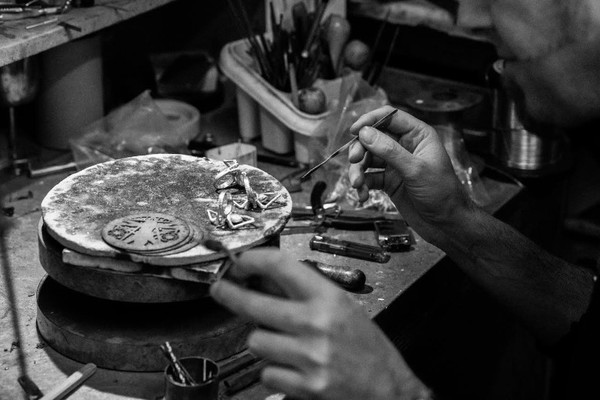
Inside the Artroom No. 002 - Meet the maker behind the Call of the Undead Pendant
March 7, 2026
Inside the Artroom: The Call of the Undead
Every piece begins with obsession. Meet Stuart, Principal Artist at Alchemy of England.
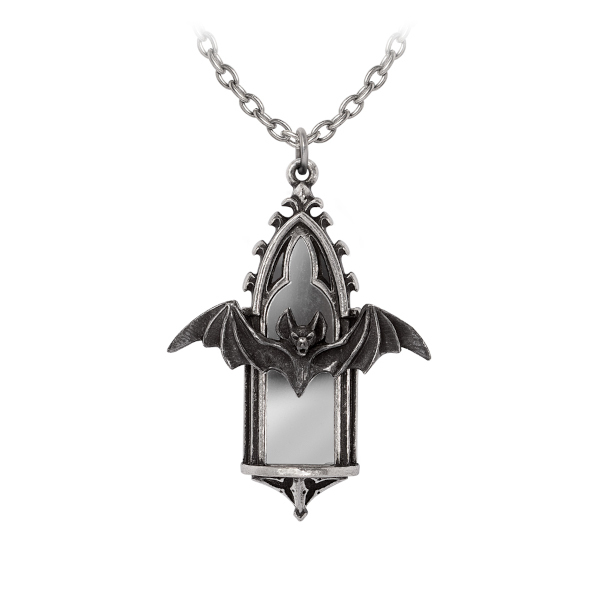
Every now and then you design a piece of gothic jewelry and think, surely we must have done this before - it feels so quintessentially Alchemy. A vampire bat emerging from a Gothic arch window, creating a perfect cross-shaped silhouette. It could hardly be more on-brand.
Apparently not. The Call of the Undead pendant arrived fully formed in Stuart's mind, a design that felt inevitable - as if it had always existed somewhere in Alchemy's catalog. Much later, on reflection, he remembered a minor black-and-white graphic artwork produced many years ago that explored a very similar idea. That piece was titled The Altar.
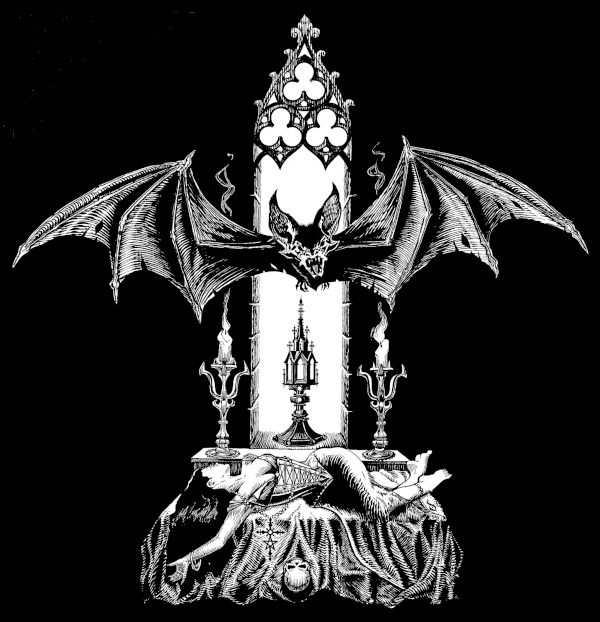
Sometimes an idea returns not because it was forgotten, but because the moment for it to exist as handcrafted pewter jewelry had finally arrived.
Sacred Thresholds and Forbidden Crossings
Gothic architecture was built to lift the eyes heavenward - those soaring pointed arches, the lancet windows filled with light. The windows were designed to create a sense of verticality, drawing the gaze upward toward the divine. They symbolized the bridge between earth and heaven, the threshold between the mortal and the sacred.
But thresholds work both ways.
In vampire lore, the threshold holds immense power. A vampire cannot enter unless invited. The sanctity of the home, the protection of sacred ground, the ward of the cross - all of these create barriers that the undead cannot cross without permission. The threshold represents an ancient, unspoken accord between the living and the dead: Thou shalt not pass.
What happens when that barrier shatters?
The Children of the Night
Bram Stoker's Dracula, published in 1897, forever intertwined the images of vampires and bats in popular culture. Though vampire legends existed long before, Stoker's novel was essential in popularizing the vampire as a cultured, enigmatic character with the ability to shapeshift into a bat. Count Dracula transforms to evade capture, to reach windows otherwise inaccessible, to approach his victims in silence.
Throughout the novel, bats appear at windows - tapping, flapping, seeking entry. In Chapter 18, Van Helsing confirms the connection: "He can be as bat, as Madam Mina saw him on the window at Whitby, and as friend John saw him fly from this so house, and as my friend Quincey saw him at the window of Miss Lucy."
Stoker understood the power of the image. A bat at the window. A silent, black silhouette against stained glass. The call of the undead, urging you to throw open casement and door - to embrace the dead of night and become as one with the revenants, wraiths, and lamia.
The bat represents more than just transformation. In Gothic symbolism, bats embody the nocturnal, the misunderstood, the creature of the underworld. They are adaptability and rebirth, freedom in darkness. They thrive in the shadows, navigating by senses the living cannot comprehend.
The Architecture of Darkness
The Gothic arch window is not arbitrary decoration. In medieval cathedral design, these tall, narrow lancet windows were structural innovations that allowed buildings to soar higher, walls to grow thinner, and light to flood sacred spaces. The pointed arch distributed weight, making it possible to construct massive windows in stone walls - an engineering breakthrough that changed European architecture.
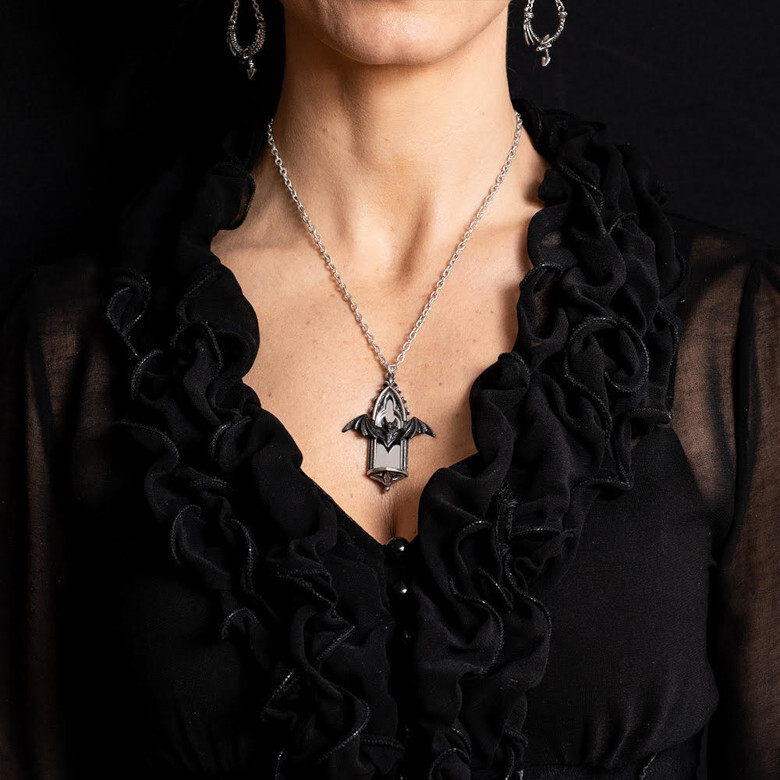
But in Stuart's design, the sacred architecture becomes a portal for the profane. The vampire bat does not seek entry to a cathedral - it emerges from within. The cross-shaped silhouette inverts the symbolism. What was meant to point toward heaven now frames a creature of eternal night.
The pendant captures that moment of crossing - the instant when protection fails, when the sacred threshold is breached, when the call becomes impossible to resist.
Stuart's Account
"Every now and then you design a piece of jewelry and think, surely we must have done this before - it feels so quintessentially Alchemy. Apparently not. A vampire bat emerging from a Gothic arch window creates a perfect cross-shaped silhouette; it could hardly be more on-brand. Much later, on reflection, I remembered a minor black-and-white graphic artwork I produced many years ago that explored a very similar idea. That piece was titled The Altar."
The Finished Piece
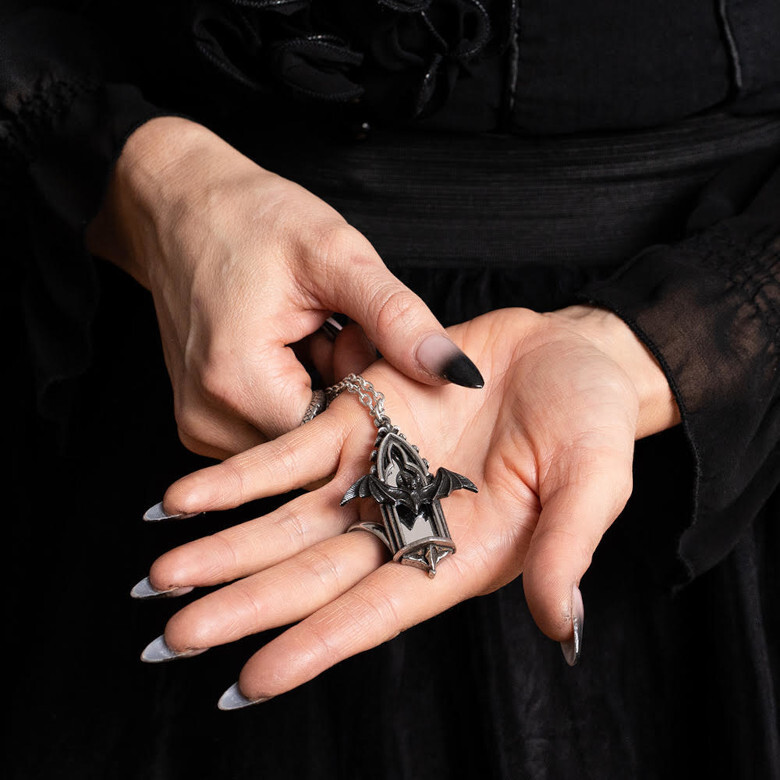
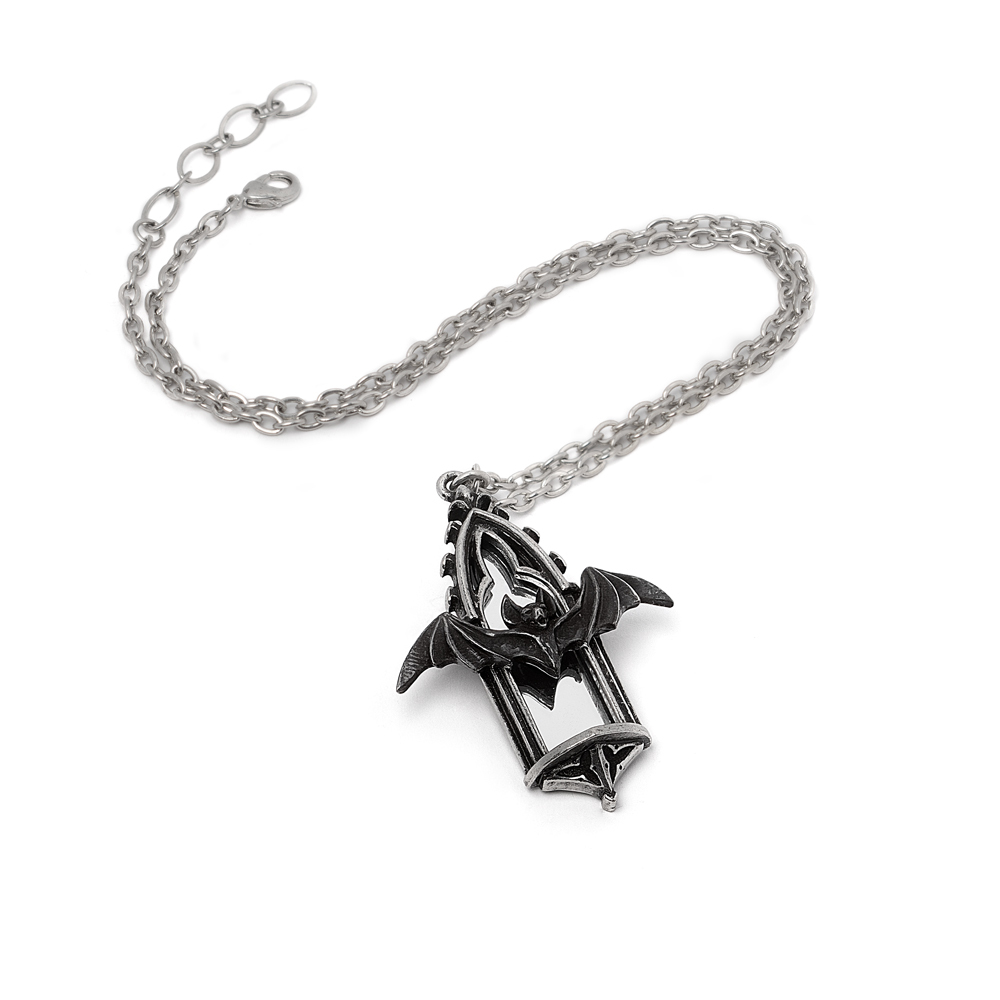
The Call of the Undead pendant hangs as both warning and invitation. Handcrafted in fine English pewter, the vampire bat spreads its wings across the Gothic arch, creating a striking cross-shaped silhouette that merges sacred and profane symbolism. This unique vampire jewelry piece captures the liminal moment - neither fully inside nor fully outside, neither living nor dead, neither rejected nor welcomed.
Like all Alchemy gothic pendants, it speaks to those who understand that darkness holds its own beauty, that thresholds are meant to be crossed, and that some calls - once heard - cannot be ignored.
For those drawn to vampire gothic aesthetics, Victorian horror, and the architecture of the sacred turned sinister, the Call of the Undead offers a wearable reminder that the most dangerous invitations are the ones you issue to yourself.